

BIK: Funding for Carbon Removal
21 October 2026
With its third funding call under the Federal Funding Programme for Industry and Climate Action (BIK), the German Federal Ministry for Economic Affairs and Energy is opening up new funding opportunities for innovative carbon capture, utilisation and storage technologies. Published on 19 October 2026, the call also offers opportunities for carbon removal: Eligible projects include Direct Air Capture and innovative CO₂ capture technologies in thermal waste treatment. Companies can submit their project outlines until 6 December 2026.
Funding for Innovative CO₂ Technologies
Through the BIK programme, the German government supports companies in reducing industrial emissions and developing new technologies for capturing, utilising and storing CO₂. The third funding call covers Module 2, Submodule 2 of the programme and specifically targets research, development and innovation projects. The funding is intended to advance innovative technologies and prepare them for future industrial deployment.
Eligible projects include those in the lime and cement industries, thermal waste treatment, basic chemicals, and the glass and ceramics industries. Direct Air Capture (DAC), which removes CO₂ directly from ambient air, is explicitly included as a separate funding category. Research projects focusing on the exploration, development and monitoring of geological CO₂ storage sites may also receive support.
For the carbon removal industry, the funding is particularly relevant where atmospheric or biogenic CO₂ is captured and permanently stored. This can result in negative emissions, provided the entire process delivers a net removal of CO₂.
One example is Direct Air Capture combined with permanent storage (DACCS). In thermal waste treatment, technologies that capture and permanently store the biogenic share of CO₂ emissions can also enable negative emissions.
CO₂ Capture Does Not Automatically Mean Negative Emissions
Not all CO₂ capture or utilisation results in carbon removal. Permanently storing fossil CO₂ prevents emissions from entering the atmosphere. Negative emissions, by contrast, occur when atmospheric or biogenic CO₂ is permanently removed from the carbon cycle and the entire process delivers a corresponding net climate benefit.
“The new BIK funding round sends an important signal to our industry. It helps companies advance innovative technologies and take the next step towards industrial deployment. Yet the BIK programme’s potential for carbon removal is not fully realised. If Germany wants to build a competitive carbon removal industry, we need to open the programme to additional suitable CDR technologies.”
Stefan Schlosser, Managing Director of DVNE
Who Can Apply?
The funding call is aimed at companies developing innovative technologies for CO₂ capture, utilisation or storage and seeking to advance their industrial application. Collaborative projects involving several partners are also eligible.
Research consortia must include at least one company intending to deploy the technology developed at an industrial production facility in Germany. For young technology companies and specialised carbon removal providers, partnering with industrial companies may therefore be particularly attractive.
The programme offers opportunities to develop new technologies under application-oriented conditions, reduce technical risks and prepare for industrial scale-up. However, eligibility depends on the specific project and the requirements of the current call. Not every carbon removal technology is currently covered.
How Much Funding Is Available?
Funding levels depend on the type and scope of the project and the applicable state aid rules. The BIK funding guidelines set the following maximum grants for research, development and innovation projects:
Project category
Industrial research
Experimental development
Feasibility studies
Maximum grant
€35 million
€25 million
€8,25 million
The standard funding rate is 50% of eligible costs for industrial research, 25% for experimental development and 50% for feasibility studies. Higher funding rates may be available under certain conditions, including for small and medium-sized enterprises. These amounts represent funding ceilings rather than guaranteed grants. Funding decisions are made through a competitive selection process and remain subject to the availability of public funds.
How to Apply
The application process consists of two stages. Companies first submit a project outline. Following an assessment, selected applicants are invited to submit a full funding application.
Two key deadlines apply to the current funding round:
- 6 December 2026: Deadline for project outlines
- 7 March 2027: Deadline for full applications from selected applicants
Funding efficiency plays a particularly important role in the selection process. One of the main criteria is the expected reduction in CO₂ emissions by 2035 relative to the amount of funding requested. This criterion accounts for 50 out of a possible 100 points. Other criteria include the degree of innovation, speed of industrial deployment, collaboration with other stakeholders and additional energy requirements.
Interested companies should therefore demonstrate not only the technical feasibility of their projects but also their expected climate impact, pathway to industrial deployment and the cost-effectiveness of the proposed funding.
DVNE Members Demonstrate the Potential of BIK Funding
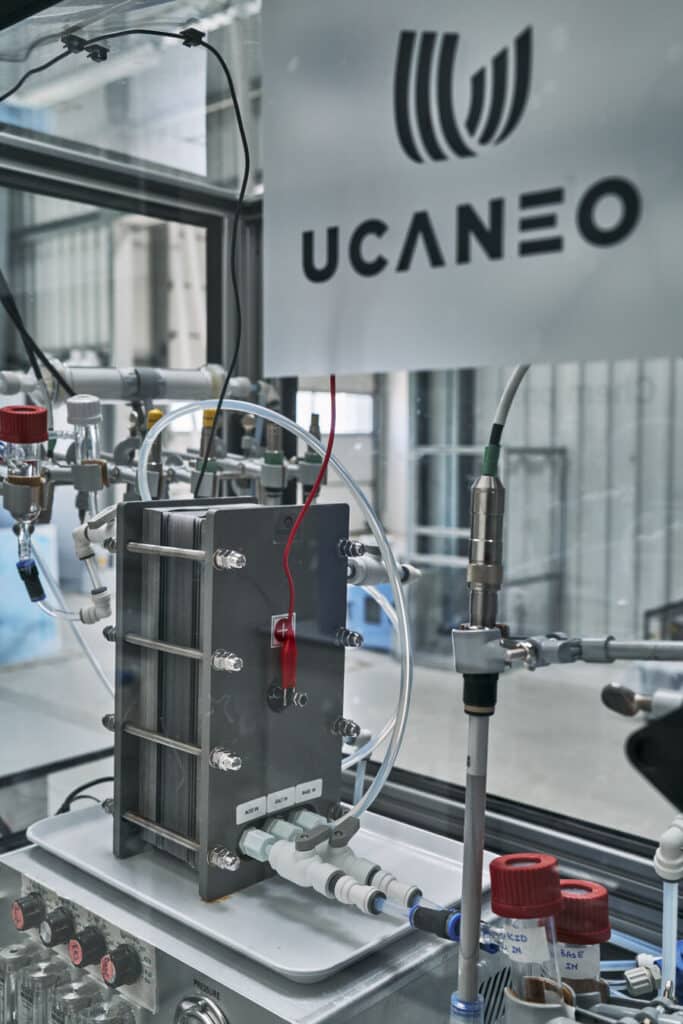
Previous funding rounds have already shown how the BIK programme can support innovative CO₂ technologies, including carbon removal. In 2025, four DVNE member companies – Ucaneo, Phlair, NeoCarbon and MVV Energie AG – received funding commitments for a total of five projects (as previously reported).
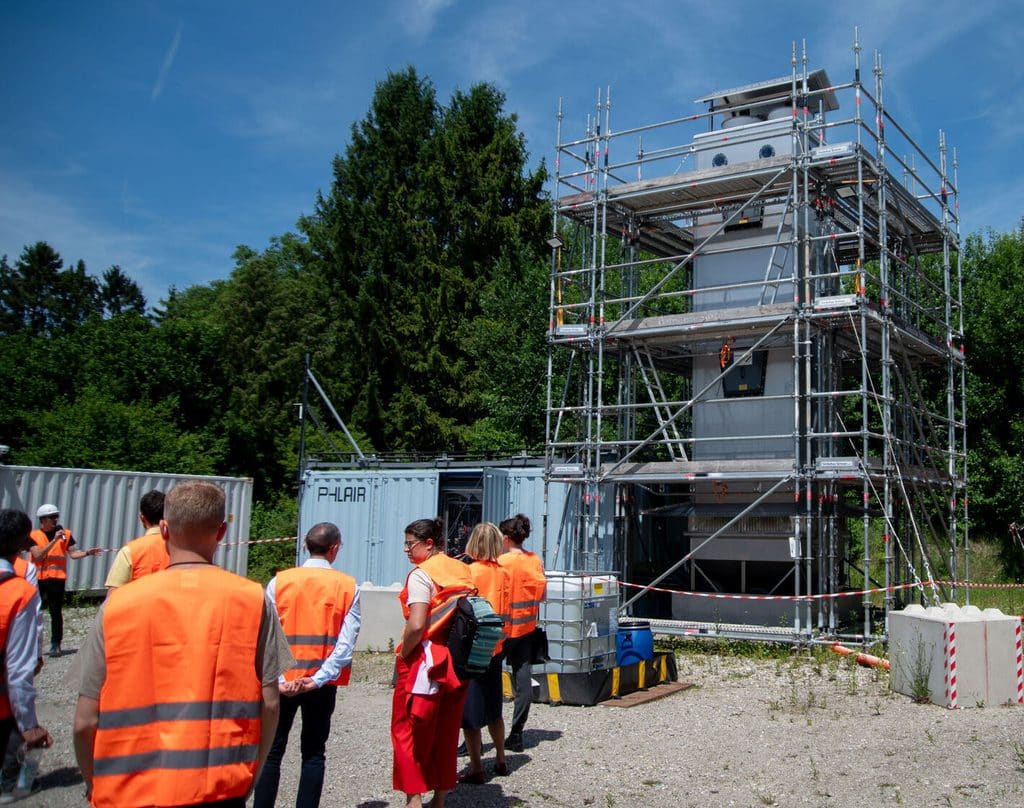
Ucaneo is developing DENI, a demonstration plant for electrochemical CO₂ capture from ambient air. Phlair is also advancing an electrochemical DAC technology through its E3CO2-SUV project, exploring options for the subsequent utilisation or storage of the captured CO₂.
NeoCarbon’s ANEWDACUS project uses industrial waste heat for Direct Air Capture, with the captured CO₂ intended for mineralisation in concrete. MVV is involved in two projects: BioCCUS explores the mineralisation of biogenic CO₂ from biogas upgrading, while CELINA focuses on the thermochemical conversion of waste into chemical feedstocks.
An Important Building Block for Industrial Scale-Up
The new funding round gives companies an opportunity to advance innovative technologies and prepare them for industrial deployment. For Germany’s carbon removal industry, this represents an important building block, as many technologies still face technical and economic challenges before they can be deployed at scale.
At the same time, the current funding call shows that the BIK programme’s potential for carbon removal has not yet been fully realised. DVNE therefore advocates expanding the programme to include additional carbon removal technologies that are compatible with its industrial funding framework.
Companies with suitable projects already have concrete opportunities to secure support. Given the short application window, potential applicants are encouraged to clarify their eligibility with the project management agency at an early stage.
Further Information and Applications
The binding funding requirements are set out in the third funding call and the underlying BIK funding guidelines. Project outlines must be submitted by 6 December 2026.
- BIK Module 2: Funding Information and Call for Proposals
- Press Release by the Federal Ministry for Economic Affairs and Energy
- BIK Funding for Four DVNE Members
Shaping the Scale-Up of Negative Emissions Together
Germany’s carbon removal industry is highly innovative and ready to take the next step towards industrial deployment. Become a DVNE member and help us drive the scale-up of negative emissions in Germany and across Europe.