

On the bus: experiencing CO₂ removal live
3rd November 2025
Two days, six stops, one mission: experiencing Germany’s future industry of CO₂ removal. On 30 and 31 October 2025, 60 selected representatives from politics, business, research and the media joined forces on the CDR Experience Tour.
Like a school trip, they travelled by double-decker bus to leading carbon dioxide removal (CDR) projects in Rhineland-Palatinate and North Rhine-Westphalia – a first of its kind, bringing together practice, science and politics.
Day 1 – Industry, politics and innovative technologies
The tour started at the EUREF Campus in Düsseldorf. Here, the organisers welcomed the guests and introduced them to the topic of negative emissions. High-profile speakers from research, politics and business presented the current status of implementation and the regulatory challenges. It became clear that CO₂ removal works and is happening – its social and political implementation is in its infancy.
In the afternoon, the tour moved on to Greenlyte Technologies in Duisburg, a company that filters CO₂ directly from the ambient air. This CO₂ is used to produce sustainable fuels and chemical raw materials, among other things – a prime example of the combination of technology, climate protection and business.
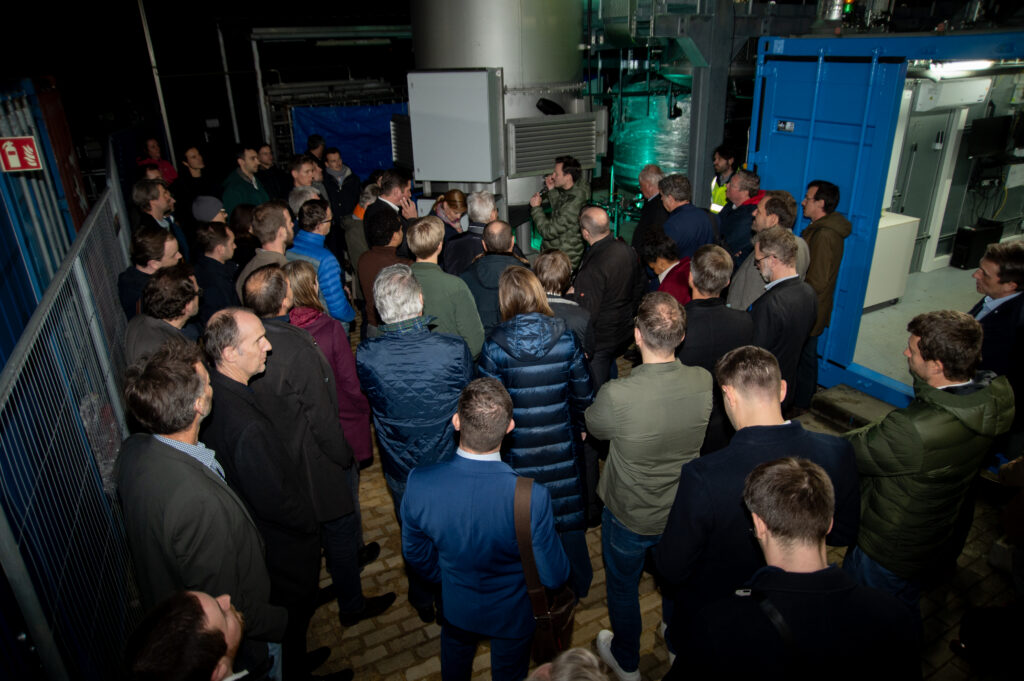
Day 2 – Nature-based methods and hybrid approaches
On the second day, the focus was on natural methods of CO₂ removal. At Lammertzhof in Kaarst, VIVO Carbon demonstrated how agroforestry systems enhance farmland, protect the soil and sequester CO₂ in the long term. ‘Pioneers who dare to try new things are particularly important,’ emphasised Svenja Nette from VIVO Carbon.
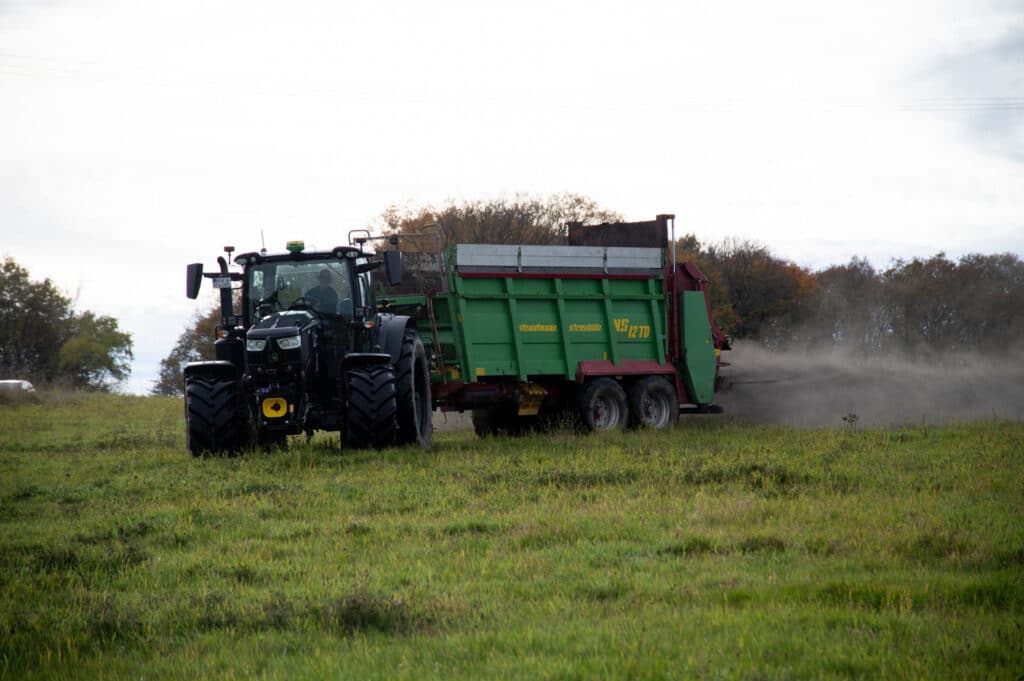
This was followed by stops at RWE in Hürth, where a mono-incineration plant for sewage sludge will capture large quantities of biogenic CO₂ in the future, at ZeroEx in Ochtendung, which spreads rock flour from a quarry on farmland to sequester CO₂ in the long term, and at Pyreg in Dörth, which manufactures and sells industrial pyrolysis plants for processing biomass into biochar.
CDR as a driver for climate protection and the economy
What remains from these two intensive days? Four key findings:
- CDR works, and German companies are leading the way – the technologies already exist but need political support to scale up.
- CDR is a driver for growth and jobs – by 2050, it could generate around €70 billion in economic potential and 190,000 new jobs in Germany.
- No climate neutrality without CDR – negative emissions are an indispensable complement to drastic emission reductions.
- CDR is diverse – from large corporations to start-ups, from technical processes to nature-based methods: all players are needed.
After the tour is before the tour
Planning for the next CDR Experience Tour in 2026 is already underway. Would you like to be there? Register your interest now and sign up here.