Where should all that captured CO₂ go?
18 November 2026
Anyone dealing with carbon dioxide removal (CDR) will sooner or later encounter the same question: What happens to the CO₂ once it has been removed from the atmosphere? Many people immediately think of pipelines and geological storage sites deep underground or beneath the seabed. But there is another way to keep carbon out of the atmosphere for the long term: storing it in buildings, roads and bridges.
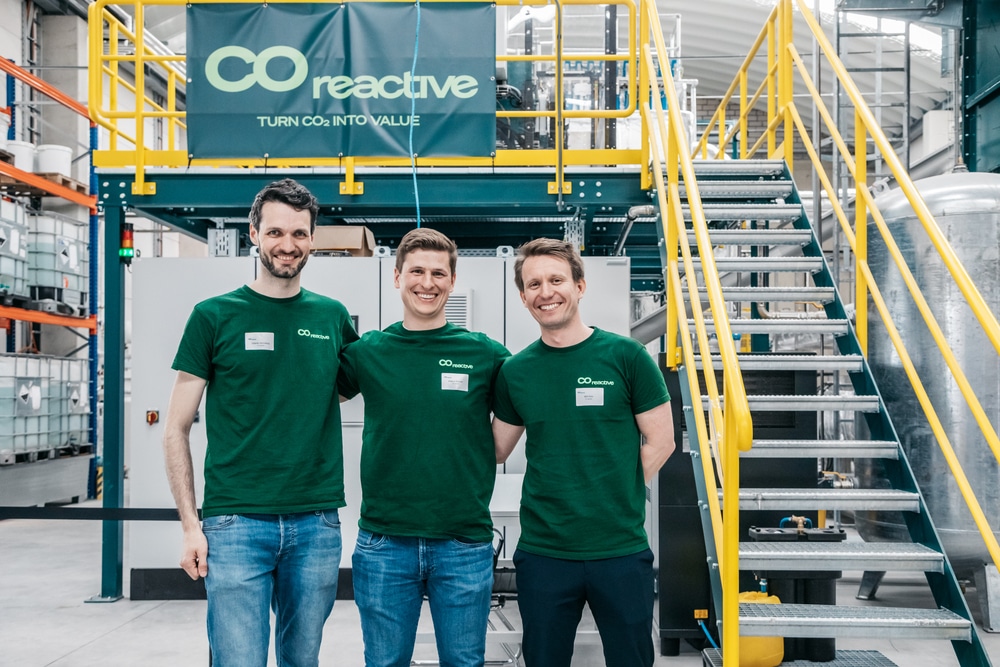
With shorter transport distances and tangible economic value, this approach offers several advantages. This is precisely what DVNE member Co-reactive is working on. The company combines carbon removal with one of the greatest challenges of industrial transformation: decarbonising the cement industry.
Buildings as Carbon Storage Infrastructure
When people think of carbon storage, they often picture geological formations deep underground. Yet long-term carbon storage does not necessarily have to take place far away and out of sight. In the future, it could become part of our everyday surroundings: residential buildings, industrial facilities, roads and other infrastructure.
Buildings would thus take on an additional function. They would no longer simply provide spaces to live, work or produce goods, but also become part of our climate infrastructure.
The question, then, is not only how we remove CO₂ from the atmosphere. It is equally important to consider how the carbon it contains can be permanently incorporated into economically valuable applications.
Rethinking Carbon as a Resource
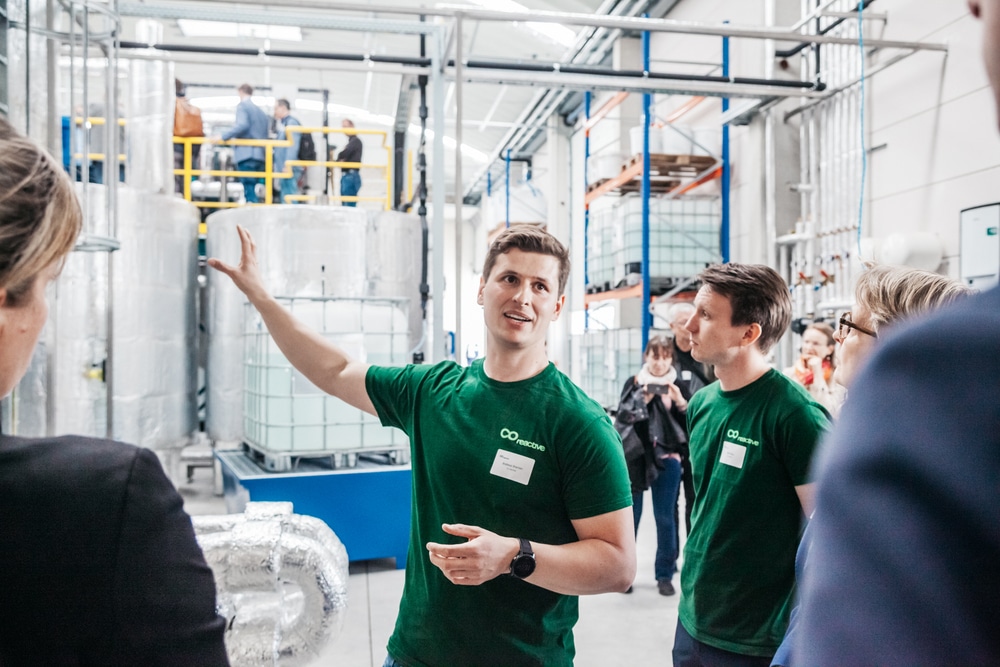
In public debate, CO₂ is usually seen exclusively as a problem: an emission that must be avoided or disposed of. For Dr Andreas Bremen, founder and CEO of Co-reactive, this perspective is too narrow:
“We need to start seeing carbon not just as an emission, but as a resource. Only by integrating it meaningfully into industrial value chains can we create a sustainable business model.”
Dr Andreas Bremen, Founder and CEO of Co-reactive
This shift in perspective fundamentally changes how we think about CDR. CO₂ removed from the atmosphere does not necessarily have to disappear into geological storage sites. It can also become part of new materials, where the carbon can remain bound for thousands of years.
Europe’s Construction Sector Faces a Dual Challenge
Around eight percent of global CO₂ emissions are associated with cement production. A substantial share of these emissions does not come from energy use but directly from the chemical process of producing clinker, the main component of cement. As a binding agent, cement is the basis of concrete, the world’s most widely used material after water.
At the same time, the industry faces a second challenge. Many of the most important materials currently used to reduce clinker content, such as fly ash from coal-fired power plants and ground granulated blast-furnace slag from steel production, are becoming increasingly scarce as Europe phases out coal and transforms its steel industry.
The challenge is therefore not simply to reduce emissions from cement production. Europe also needs new sources of cementitious materials that can be supplied in sufficient quantities over the long term.
Supplementary Cementitious Materials
For Co-reactive, this dual challenge represents an opportunity. The company has developed a mineralisation process in which CO₂ reacts with calcium- and magnesium-bearing mineral feedstocks, including industrial residues. The CO₂ is chemically converted into stable carbonates, such as calcium carbonate and magnesium carbonate, and permanently bound within the material.
The process produces a high-performance supplementary cementitious material (SCM). Its climate benefit begins during production: More CO₂ is permanently mineralised within the product than is emitted during its manufacture. The SCM therefore already has a negative CO₂ balance at the factory gate, regardless of the specific cement or concrete formulation in which it is subsequently used.
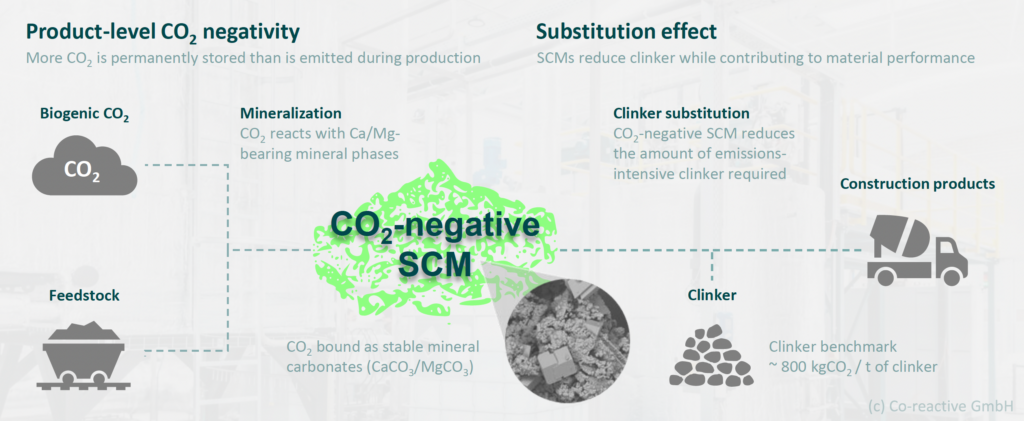
A second, additional climate benefit arises when the material is used. The SCM can replace part of the emissions-intensive clinker in cement, thereby avoiding further process emissions. The extent of this substitution effect depends on the specific formulation, the amount used and the reference material being replaced.
Co-reactive thus combines two distinct effects in a single product: permanent CO₂ storage within the SCM itself and additional emissions avoidance through reduced clinker content.
From Carbon Storage to a Commercial Product
Many carbon removal approaches face the same challenge: Removing CO₂ costs money, and so does storing it permanently.
Mineralised construction materials offer a different approach. Rather than simply storing carbon, the process also creates products with their own industrial value.
“Carbon removal will only succeed at industrial scale if climate benefits and economic value go hand in hand. That is exactly where we are focusing our efforts,” Bremen emphasises.
CDR thus becomes part of an industrial value chain. The permanently bound carbon does not simply disappear from the economic system. It becomes part of materials used in buildings and infrastructure for extended periods.
From the Laboratory to Industrial Production
Whether a technology can realise its industrial potential is not ultimately decided in the laboratory. Only continuous operation can demonstrate whether processes remain stable, material quality is reproducible and production can be scaled economically.
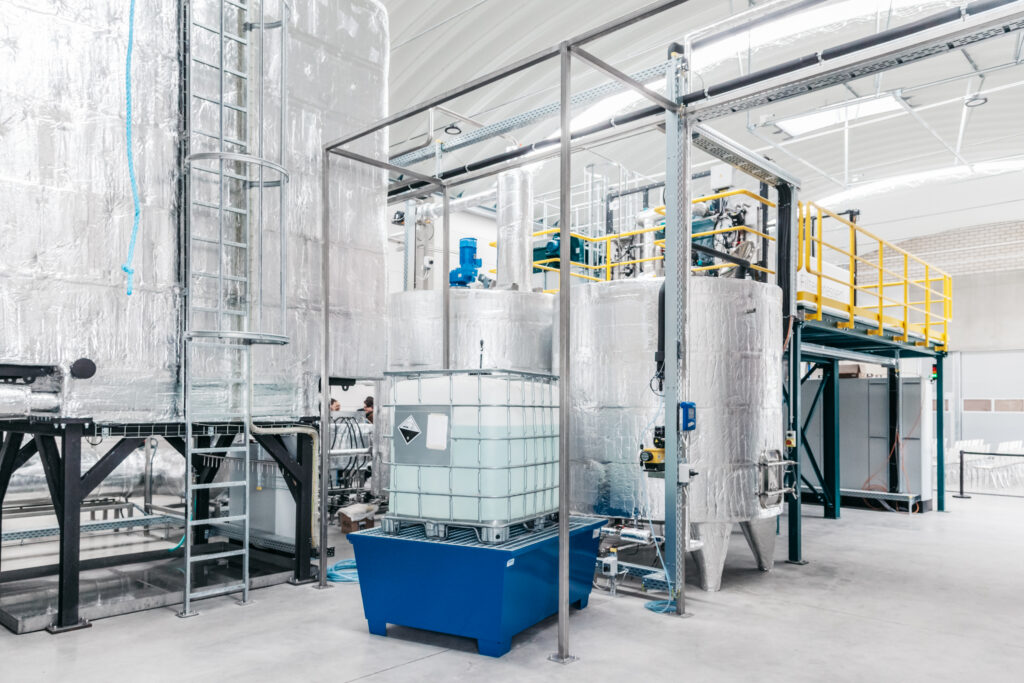
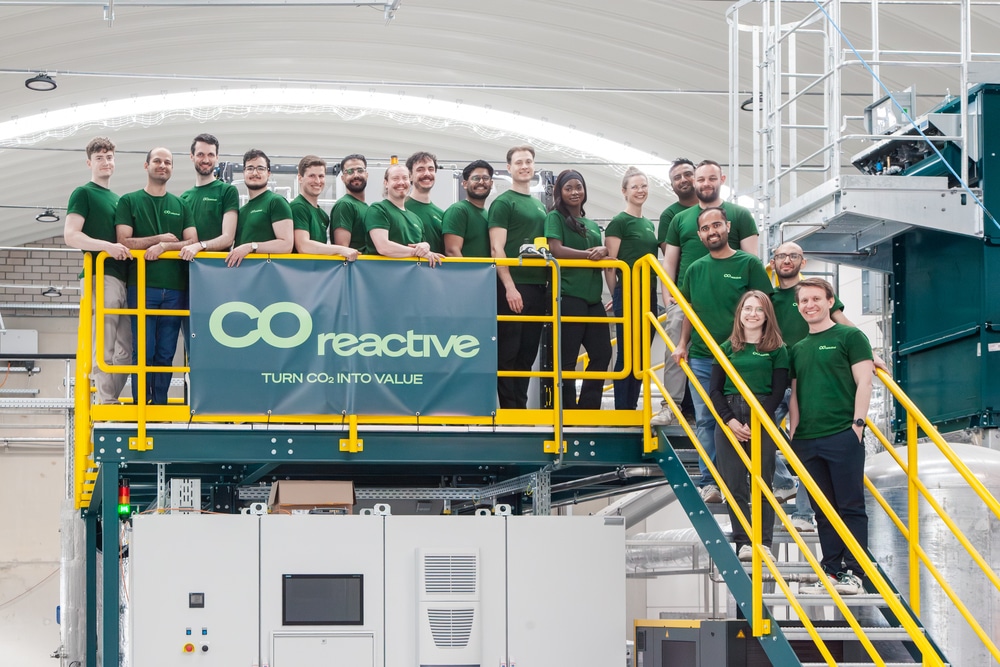
With the continuous operation of its demonstration plant in Erkrath, Co-reactive has reached an important milestone on the path to industrial scale-up. The plant is designed to produce 1,000 tonnes of SCM per year and uses biogenic CO₂ to manufacture cementitious materials.
The real significance of this milestone, however, lies not in the production volume itself. What matters is that the technology can now prove its performance through continuous operation under real industrial conditions.
The insights gained into process stability, product quality and operational performance will provide the foundation for the next stage of scale-up. The company’s first commercial plant, which has already secured financing, is scheduled to begin operations at the end of 2027 with a capacity of 10,000 tonnes of SCM per year.
This will be the next step towards industrial facilities with annual capacities of 100,000 tonnes or more. With these plants, Co-reactive aims to contribute to the decarbonisation of Europe’s cement and construction materials industries while helping secure future supplies of additional SCMs.
Carbon Removal Does Not End with Capture
CDR is often reduced to the moment when CO₂ is removed from the atmosphere. In reality, this is only the first step. It is permanent storage that ultimately determines whether the process results in negative emissions.
Co-reactive demonstrates one possible approach to such storage: not as a replacement for geological storage, but as a complementary solution that combines climate action with industrial transformation. Perhaps this is where the most exciting potential lies.
The buildings of the future could do more than generate fewer emissions than they do today. They could also become part of the solution by storing carbon for generations to come.