

Lisa Mangertseder: The Evolution of CDR
25 October 2026
After more than three years on the Board of the Deutscher Verband für negative Emissionen e.V. (DVNE), our former Deputy Chair Lisa Mangertseder reflects on the evolution of Carbon Dioxide Removal (CDR). In this interview, she discusses the increasing professionalisation of the market, the importance of policy frameworks and her new role at SIX.
When Lisa joined the DVNE Board, CDR was still a largely unknown topic in public and political debate. Today, CDR is firmly on the European climate policy agenda: the European Commission has proposed integrating permanent carbon removals into the EU Emissions Trading System (EU ETS).
Lisa accompanied this transition as Deputy Chair of the DVNE for more than three years, helping shape the work of our association. She has now stepped down from the Board and taken on a new role as Senior Business Development Manager for Carbon Markets at SIX.
We asked her about the changes she has witnessed in the CDR market, the challenges that remain and how her work at the DVNE connects to her new responsibilities.
What has changed most significantly in carbon dioxide removal (CDR) during your time as Deputy Chair of DVNE?
The biggest change I have observed is that carbon removal is increasingly moving away from being a niche market and becoming embedded within existing economic systems and value chains.

A few years ago, discussions focused primarily on carbon removal technologies themselves. Today, the conversation is increasingly about how carbon removal can be embedded into broader decarbonisation strategies across sectors to build coherent ecosystems. We see this in areas such as construction, agriculture, waste management, energy, and finance.
The financial sector is a good example of this evolution: When I joined DVNE, the CDR market was largely characterized by fragmented, over-the-counter transactions between individual buyers and project developers. Every transaction required extensive due diligence, bespoke contracts, and project-specific assessments.
Today, we increasingly see the emergence of intermediaries familiar to financial markets. Standards bodies, registries, verifiers, insurers, brokers, regulators, marketplaces, and infrastructure providers are moving towards creating more transparency, comparability, and trust needed to move from isolated bilateral transactions towards a more structured market.
The direction of travel is clear: the market participants are pushing from isolated, bilateral transactions towards a structured market with improved risk management, greater liquidity, and access to institutional capital. We are not there yet, but this transition will be critical for a bankable, high-quality carbon market and, eventually, carbon removal-backed financial products with clear ownership and liability.
My most important observation is that policy and buyer demand remain both the sector’s most important enabler and its principal bottleneck. The pace of market development is less constrained by technological progress than by the speed at which policies, standards, and market frameworks evolve.
And in that regard, carbon removal is not unique. It has been proven during the last decade that renewable energy, electric vehicles, and even modern recycling industries all relied on policy support in their early stages before reaching commercial scale.
How does your current role at SIX build on your work for DVNE? What lessons and experiences are you bringing with you?
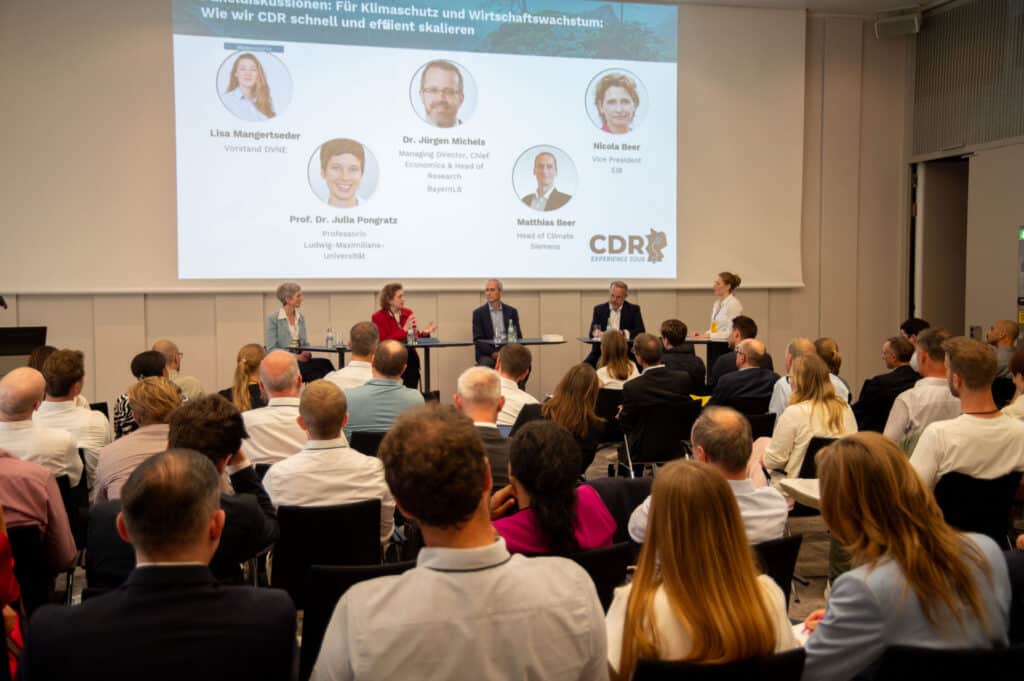
Serving on the board of the DVNE for over three years provided a unique opportunity to engage with people representing every part of the carbon removal ecosystem, and to see first-hand both its progress and its challenges. It reinforced my belief that scaling carbon removal is not only a question of technological innovation, but also of creating the conditions that allow markets to function efficiently and attract capital.
That insight is highly relevant to my work at SIX. For decades, SIX has helped build trusted financial markets by providing infrastructure, standards, and services that enable market participants to transact with trust. Combining Switzerland, Spain and the UK, we operate the second largest exchange in Europe.
Early on, SIX understood that carbon removal is increasingly becoming relevant not only as a climate solution but also as a potential new asset class that is attracting the attention of corporates, investors, governments and financial institutions.
As companies and countries work towards net-zero targets, demand for high-quality carbon removal is expected to grow, creating a need for trusted market infrastructure, transparent price discovery, and efficient market access. This is where SIX can play an important role.
In 2024, SIX made a strategic minority investment in Carbonfuture, an end-to-end digital infrastructure provider for carbon removal credit issuance. Together, we have the ambition to support the development of the carbon removal ecosystem and prepare the infrastructure needed for carbon removal to become a credible, scalable and investable market over time.
I would like to thank the DVNE board, team, and all members for their hard work, dedication, and commitment to advancing carbon removal. Congratulations on the progress and achievements to date. I am excited to see DVNE continue to grow its impact and help shape the future of the sector.
Thank you, Lisa!
We sincerely thank Lisa for her commitment, expertise and the perspectives she brought to the DVNE. She helped shape our association during an important phase of its development. We wish her every success in her new role at SIX and look forward to staying connected.